Learn how preventing flat roof leaks with regular checks can extend your roof’s lifespan and prevent costly water damage. Maintain a leak-free roof today.
What to look for after heavy rain
After heavy rain, only check the roof if it is safe. Indoors, look for drips, damp patches, peeling paint, or a musty smell. Check loft spaces too, because water can travel before it shows. Outside, look for fresh puddles and note spots where water sits for hours. Watch for leaves, gravel, or litter that has moved and may block an outlet.
Look at roof lights, vents, and pipe openings for gaps or lifted seals. Check that gutters are not overflowing and that downpipes are running freely. If you can, walk the edge line and look for loose trim. Take photos and write the date, so changes are tracked easily. If you see active dripping, protect electrics and call for help.
Inspecting flashing, trims, and roof edges
Flashing and edge trims stop water getting in where the roof meets walls, parapets, roof lights, and pipes. Because these parts sit at joins, they are often where a leak starts. Begin by looking along the whole roof edge. Check that metal trims are straight, fixed firmly, and not bent back by wind. Look for missing screws, loose fixings, rust marks, or sealant that has cracked and pulled away.
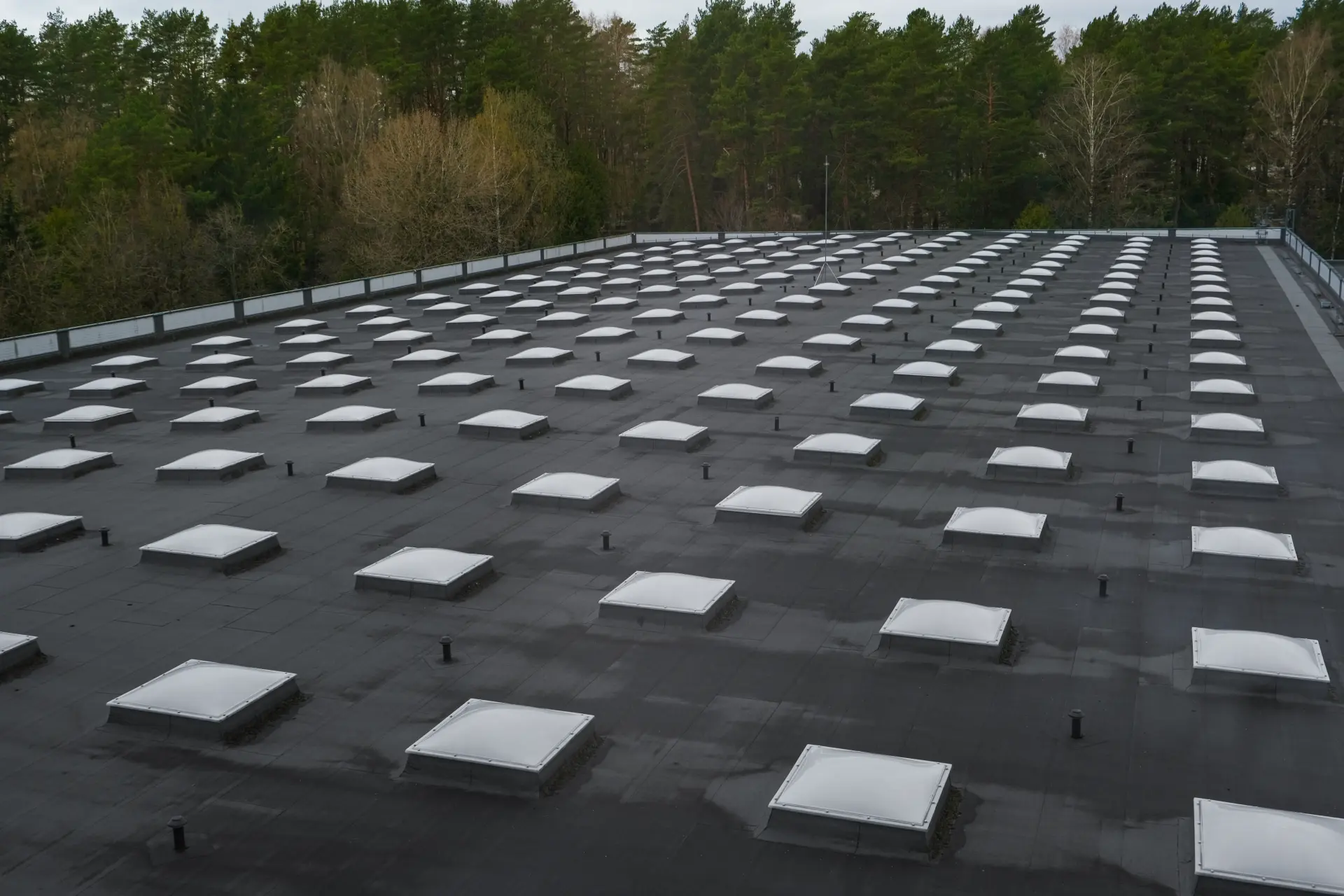
Next, inspect flashing where the roof turns up a wall. It should sit tight against the surface with no gaps. Pay close attention at corners, because small openings can let water blow in. If the roof has an upstand around a roof light, make sure the covering is well stuck and not lifting at the top. Check pipe collars and vent bases too, as these are common weak points.
Then check terminations, drip edges, and any capping pieces. Water should run off into a gutter or outlet, not behind the trim. Staining on brickwork, green algae, or flaking paint just below the edge can suggest water is escaping.
Also look for gaps where cables, brackets, or rail posts pass through the edge detail. These openings need a neat seal all the way round. If anything looks loose or damaged, plan a repair before the next wet spell. If access is limited, use binoculars from ground level to spot lifted edges. Mark problem areas on a simple sketch, so a roofer can find them quickly. Small faults here can cause major leaks.
Checking for standing water and poor drainage
Standing water is a common cause of flat roof leaks. After rain, look for areas that stay wet long after the rest has dried. Even a shallow puddle can work into small weak points over time. Check that outlets are clear and that water is running towards them. If the roof has gutters, remove leaves, moss, and silt so water can flow.
Look for sagging spots where the surface dips, as this often means the deck below is soft. Check rainwater pipes for cracks and blockages, and watch them during a shower if you can. If water overflows, it is a warning sign. Poor drainage should be fixed quickly, before winter. Also clear scuppers and check grates are not bent.
Looking for cracks, splits, and worn areas
A flat roof covering ages in sun, wind, and cold. Regular checks help you spot wear before it becomes a leak. Start by looking for cracks, splits, or small tears in the surface. These often appear around roof lights, vents, corners, and changes in level, where the covering is stretched. Cuts can also happen after foot traffic, or when ladders and tools scrape the roof.
Next, look for worn patches where the surface has thinned. On mineral felt, you may see areas where the grit finish has rubbed away. On rubber or sheet systems, you might notice scuffs, dull patches, or pinholes. If the roof has a protective coating, check for peeling, powdery residue, or bare areas.
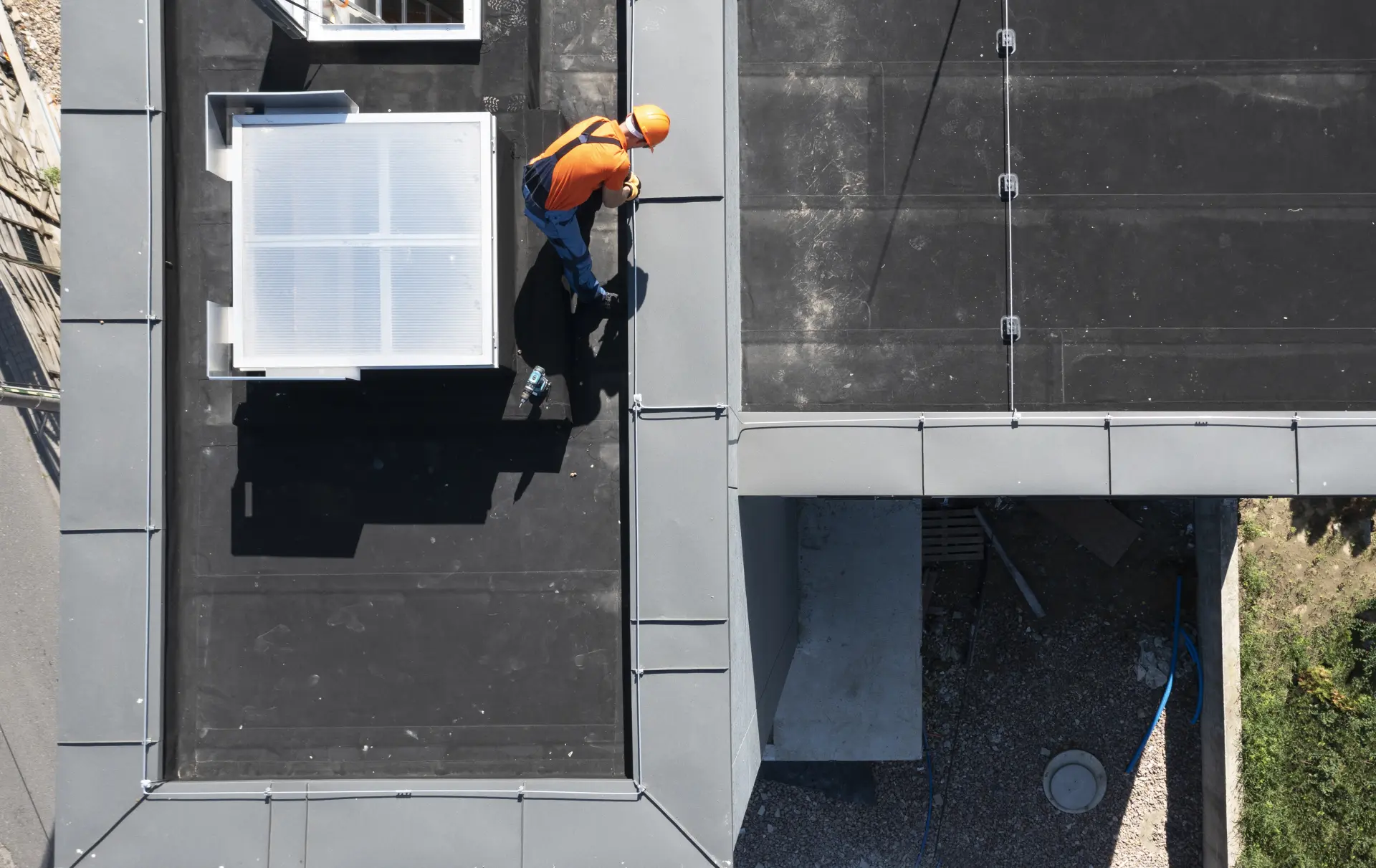
Watch for blisters or bubbles. These can form when moisture is trapped under the covering. A blister may not leak today, but it can split later, especially in hot weather. Also look for lifting edges or places where the covering has pulled back, because wind can drive rain underneath.
Do not forget fixings for panels, rails, aerials, or pipe supports. Check that seals are intact and that water is not pooling around the base. If you find damage, avoid quick patches with household tape.
Use a repair suited to the roof type, or ask a roofer to assess it. Brush away loose grit so you can see clearly, and note the size and position of each defect. If a crack widens when pressed, treat it as urgent and arrange repairs before rain returns.
Checking seams, joints, and overlaps
Seams, joints, and overlaps are the lines where two pieces of covering meet. If they fail, water can track underneath and spread far from the entry point. Look along every seam for lifting edges, wrinkles, gaps, or areas that look poorly stuck down.
On felt roofs, check for splits at the lap and spots where the bond looks weak. On sheet roofs, look for openings along weld lines, or places where adhesive has let go. Pay extra attention around outlets, roof lights, and corners, where several joins meet. Gently press the seam with a gloved hand. If it moves easily, it may be coming loose. Check again after strong winds, and arrange repairs promptly. Keep a simple log of findings.
If you have a flat-roof leak in Milton Keynes, Bucks, or surrounding counties then give us a call to arrange a flat roof survey where we can detect and map all affected areas. Our detailed reports will facilitate efficient repairs at minimal cost.
If you just want to be pro-active and detect membrane defect issues in their early stated, so as to prevent major roof damage, then give us a call and we can arrange low-cost 5-yearly surveys so as to monitor roof membrane condition and keep repair costs, disruption, and carbon footprints to a minimum.