Discover the most common flat roof leak problems affecting UK properties. Learn how to identify, prevent, and resolve issues to keep your roof secure and watertight.
Leaks caused by standing water
Standing water is one of the biggest causes of flat roof leaks. After heavy rain, water should run away to an outlet. If the roof has a slight dip, water can sit for days. This is called ponding. Over time, ponding softens many roof coverings and can wear away their surface. It also makes cold weather damage worse, because water can freeze, expand, and open tiny gaps.
The extra weight can strain weak spots, seams, and edges. Signs include dark patches, blisters, moss, or a damp smell indoors. If puddles remain after two days of dry weather, the drainage or roof shape needs attention. Left untreated, small leaks can grow fast and soak insulation, timbers, ceilings, and electrics very quickly.
Split or cracked roof covering
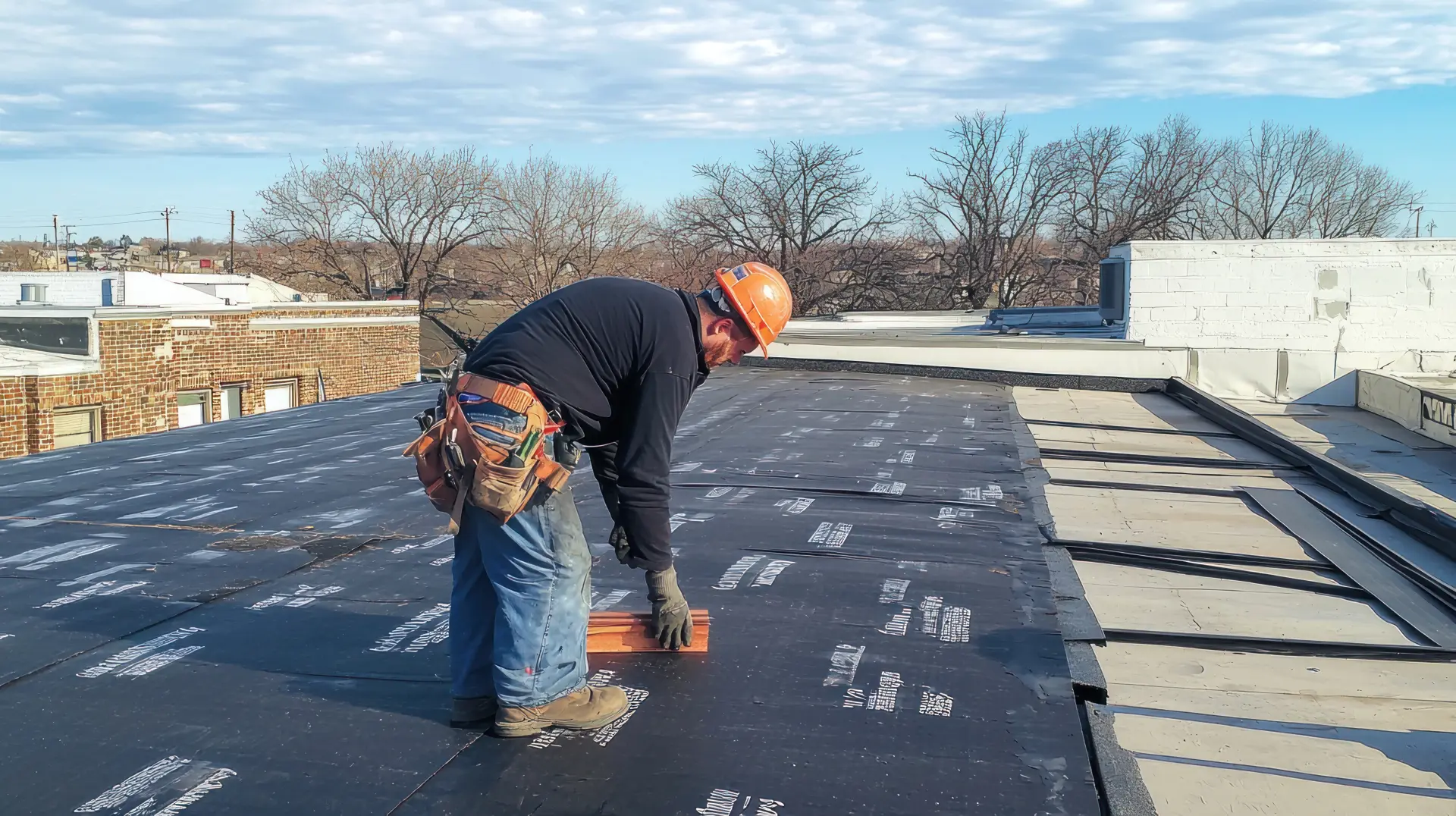
A flat roof covering is the main barrier that keeps rain out. When it splits or cracks, water can slip through and spread under the surface. Cracks often start small, then widen as the roof heats up in sun and cools down at night. Older coverings can dry out and lose their flexibility, so they tear more easily. Foot traffic can also cause damage, especially near ladders, roof hatches, and walkways. Dropped tools, sharp stones, or branches can cut the surface, and hail can bruise it.
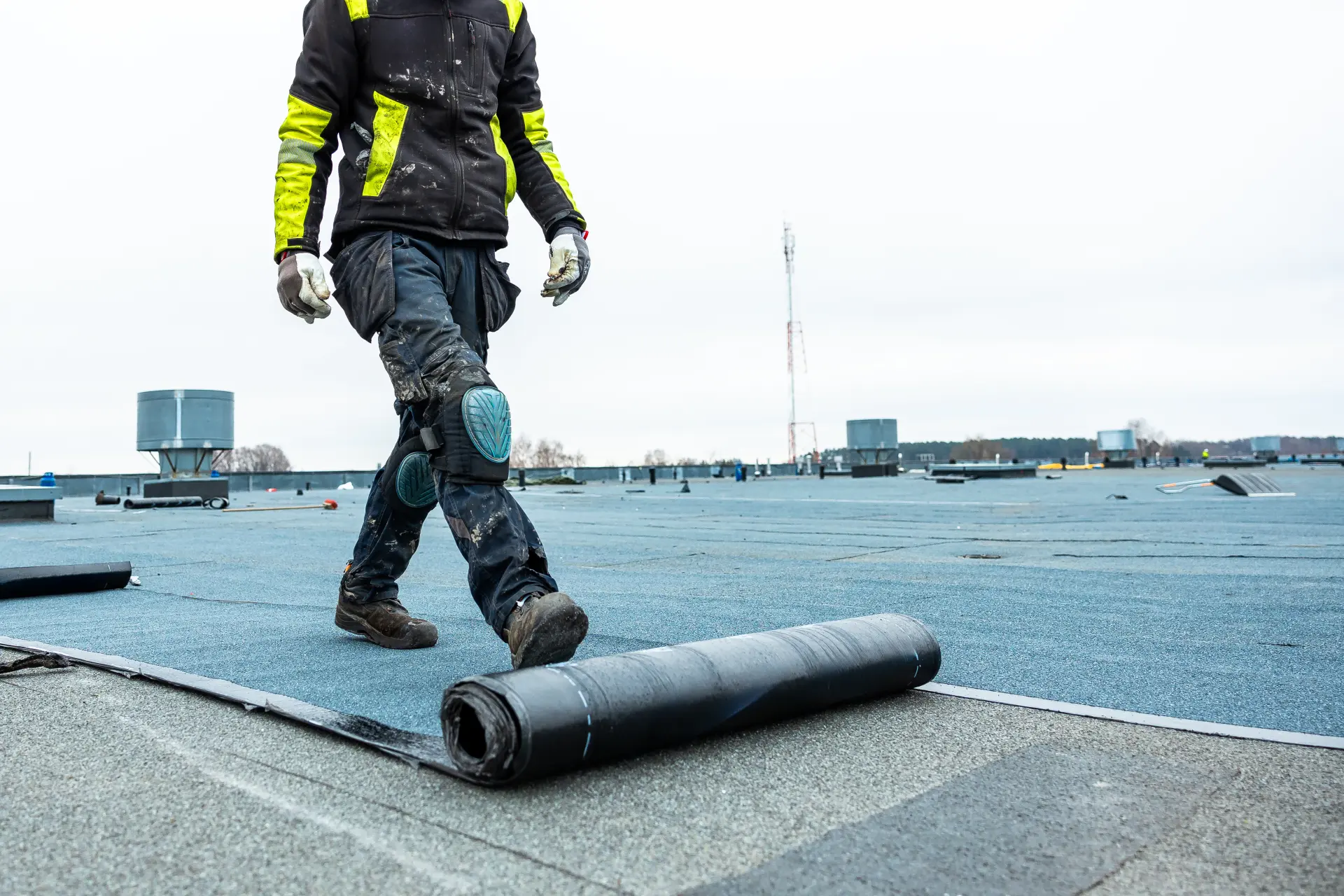
On some roofs, blisters form when trapped moisture turns to vapour and pushes up the covering. When a blister bursts, it can leave a weak spot that splits.
Look for visible lines, rough patches, lifted corners, or an area that feels softer underfoot. Inside, you may notice brown marks on the ceiling, peeling paint, or dripping after rain.
Do not ignore one crack, because water can travel sideways and appear far from the real hole. Quick, safe fixes include keeping the area clean and dry and avoiding walking on it.
A roofer may patch small splits, but widespread cracking often means the covering is near the end of its life and needs renewal.
Common coverings include felt, rubber, and fibreglass. Each can crack if fitted badly or stretched too tight. Joints around skylights and vents are also at risk. After storms, check for cuts and loose areas. Keep leaves off the roof, and repair damage early to stop bigger leaks. Fixing early cuts costs.
Failed seams and weak joints
Many flat roofs use sheets that meet at seams, or they have joints where different parts join. If these points fail, water can get in even when the rest of the roof looks fine. Seams can lift when adhesive breaks down, when heat makes the roof move, or when wind tugs at loose edges. Poor fitting can leave tiny gaps that grow over time.
Joints are also common around vents, skylights, and where the roof meets a wall. Signs include raised lines, small openings, or dirt that has washed into a crack. Indoors, leaks may show as stains that appear after wind driven rain. Regular checks and quick repairs help stop seam failures spreading. Once open, seams can leak badly.
Damaged flashing at edges and upstands
Flashing is the protective strip that seals the roof where it meets an edge or a vertical surface. On a flat roof, these areas include the outer edges, parapet walls, door thresholds, and the raised parts around vents and roof lights, called upstands.
Even a small split in flashing can let water run behind the roof covering and into the building. Flashing can fail because of age, sunlight, and constant movement as the roof warms and cools. Wind can lift loose flashing and pull at fixings. Water can also get in where sealant has shrunk, where nails have backed out, or where the flashing was never turned up high enough.

Damage is common after storms, or when ladders and tools rub the edge. Look for gaps, curling, rust stains, cracked corners, and missing sections. Inside, leaks near an outside wall may show as damp patches high up, mould, or a wet window head.
Because flashing sits at the most exposed parts of the roof, small problems can become serious quickly. A repair may involve refixing loose sections, replacing damaged lengths, and resealing joints. Keeping edges clear of leaves and checking them every season helps you catch issues early.
If the building has metal trims, check the screws and washers, as these can loosen. On felt roofs, the edge can lift if the final layer was not bonded well. Upstands should be tall enough to stop splash back. If water marks keep returning, get a full edge inspection from a roofer.
Blocked outlets, gutters, and drains
Flat roofs rely on clear outlets, gutters, and drains to move rainwater away. When these block, water backs up and starts to sit on the roof. Leaves, moss, silt, and bird nests are common causes, especially in autumn. Blocked gutters can overflow onto walls, which can look like a roof leak. Blocked internal drains can be worse, because the water has nowhere to go and can rise above the roof edge.
Signs include slow draining puddles, gurgling sounds, and water marks on brickwork. Keep grates and gutters clear, and fit leaf guards where suitable. After heavy rain, check that water is flowing freely. Regular clearing helps prevent leaks and reduces wear on the roof surface. It cuts slippery algae growth.
If you have a flat-roof leak in Milton Keynes, Bucks, or surrounding counties then give us a call to arrange a flat roof survey where we can detect and map all affected areas. Our detailed reports will facilitate efficient repairs at minimal cost.
If you just want to be pro-active and detect membrane defect issues in their early stated, so as to prevent major roof damage, then give us a call and we can arrange low-cost 5-yearly surveys so as to monitor roof membrane condition and keep repair costs, disruption, and carbon footprints to a minimum.